
Markets are quick to price relief, especially when the risk being removed was never fully quantified in the first place.
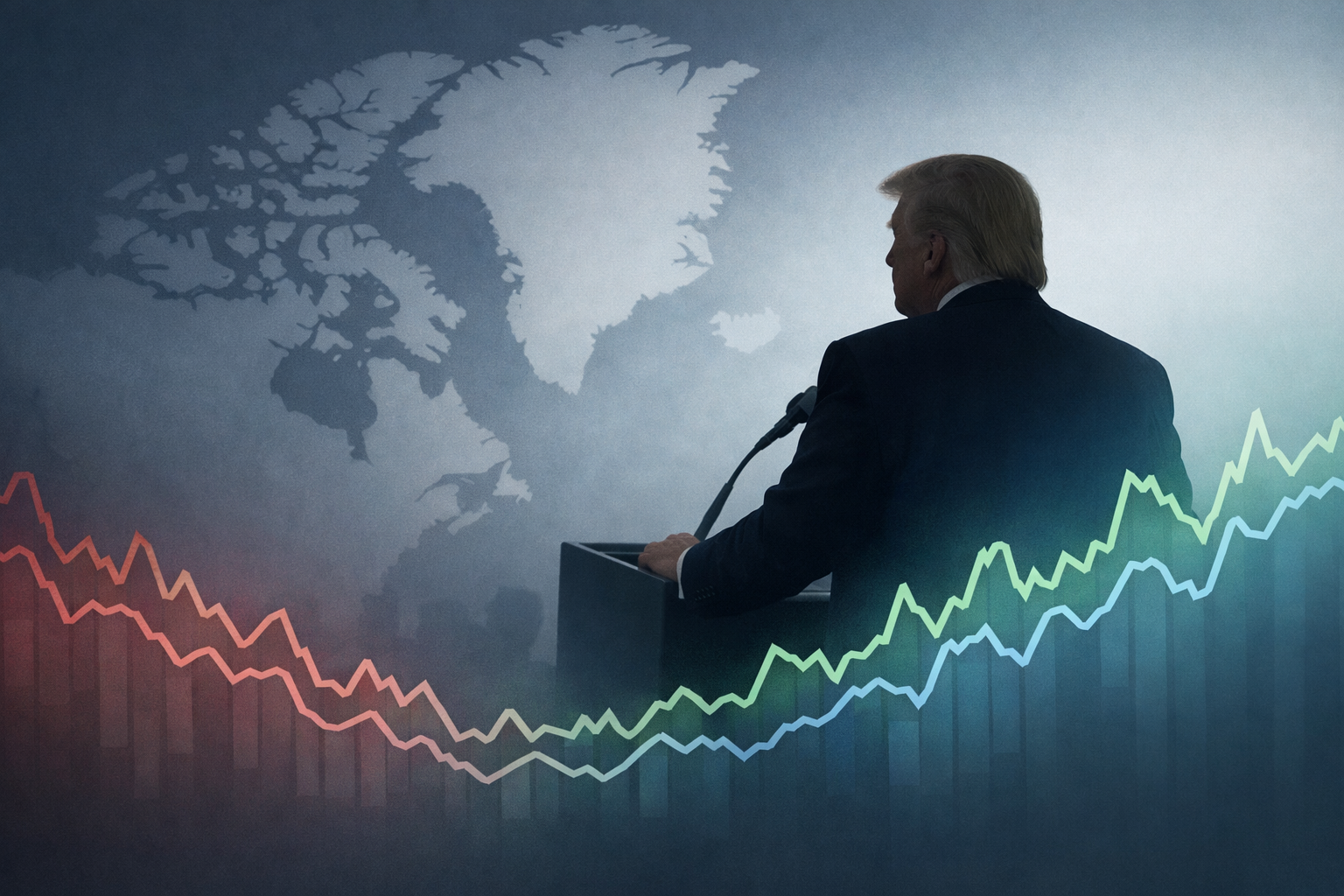
That dynamic was visible after Donald Trump ruled out military action related to Greenland, easing geopolitical anxiety that had contributed to a sharp sell-off earlier in the session. U.S. equities rebounded as investors recalibrated risk expectations, treating the clarification less as new information and more as the removal of an extreme tail risk.
The rebound, covered in live market updates by CNBC, reflected how sensitive markets remain to geopolitical headlines, even when the probability of escalation is low. What mattered was not the policy substance, but the reduction of uncertainty.
Relief rallies and what they actually signal
Markets price probabilities, not statements. When a worst-case scenario is taken off the table, positioning adjusts quickly. Short-term traders cover, volatility compresses, and indexes stabilize, often regardless of underlying fundamentals.
That does not mean confidence has fully returned. Relief rallies tend to be mechanical rather than conviction-driven, especially when macro questions around rates, earnings, and global growth remain unresolved. In these cases, equities respond more to shifts in perceived risk than to improvements in outlook.
There is also a timing element. When markets are already stretched or sentiment is fragile, geopolitical reassurance can act as a trigger for snap-back moves. But those moves are often vulnerable if they are not followed by supportive data or policy clarity.
The risk for investors is overinterpreting the bounce. A single statement can reset near-term sentiment, but it does not rewrite broader macro conditions. Without confirmation from earnings trends or economic indicators, relief-driven gains tend to narrow rather than expand.
The takeaway is measured. Markets reacted not because fundamentals changed, but because uncertainty briefly declined. As long as geopolitical headlines continue to intersect with an already cautious macro environment, price action will remain sensitive to tone, timing, and positioning rather than long-term conviction.